
Got Shade?
 I can’t remember ever recommending a particular plant before . . . well, except for LaVille’s Abutilons and Passion Vines. But I have had such success with Holly Ferns, that I can’t help but mention them. I probably have a dozen of these ferns now—on the south side of the house under a solid cover, on the west next to a solid fence, and on the north side near the front of the house. The key element is shade.
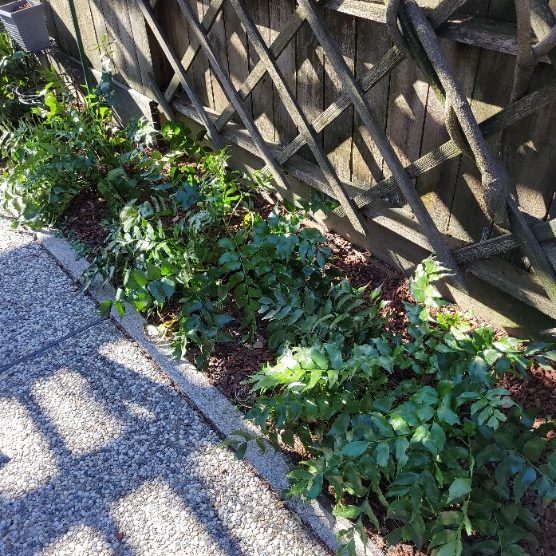
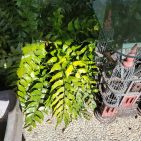
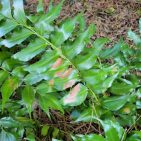 The first photo is poor because of the partially blocked winter sun, but in the summer, shade is complete because of a Wisteria overhead. The second photo shows what happened when the hot summer sun snuck around the north side of the house and burned a few leaves. The third photo shows that the weak winter sun shoots under a 12 foot cover to strike the plants. That last photo also shows the yellowing caused by a lack of magnesium in the soil. I recently treated with Epsom salts which will solve the problem for a couple of these plants.
 Happy Holly Ferns will spread to an excess of 3 feet. Moisture needs are moderate in well-draining soil, so yes, this is not a native plant if that’s your calling. But if you are an evil lawn lover like me, and have a shady planting area, the Holy Fern may be your dream come true, especially since they seem to be heat and cold tolerant and very low maintenance.
Stan, The Shady Man
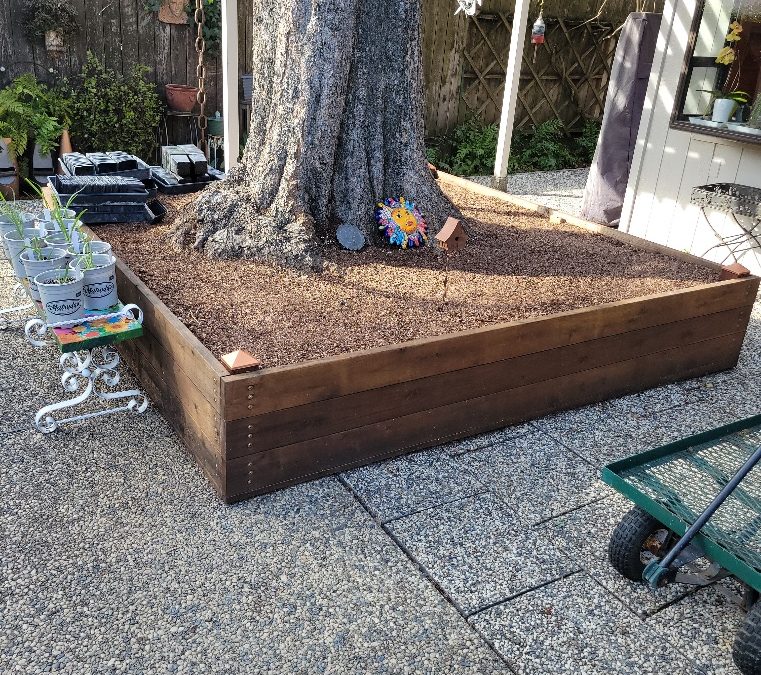
 Here is another bit of advice I’m going to give you, even though you could care less. You can see in the first photo the box that surrounds the base of our huge hackberry tree. This is the third box that had to be constructed as the tree grew. We have decided this time to leave the soil bare in the box. The previous box contained potted geraniums and cyclamen around the edges that had been sunken into the soil. Over seasons, we discovered that tree roots invaded the pots through the drain holes and were sucking the water out of the pots as well as the nutrients.
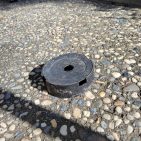 So, I dug the holes a little deeper and placed what you see in the second photo. This is the cut off base of a sturdy gallon pot with a large hole drilled in the center. When inserted upside down beneath the potted plant, this arrangement creates an air gap that roots won’t cross. So, there you have it—an idea for which you probably have no use. Interesting though, don’t you think?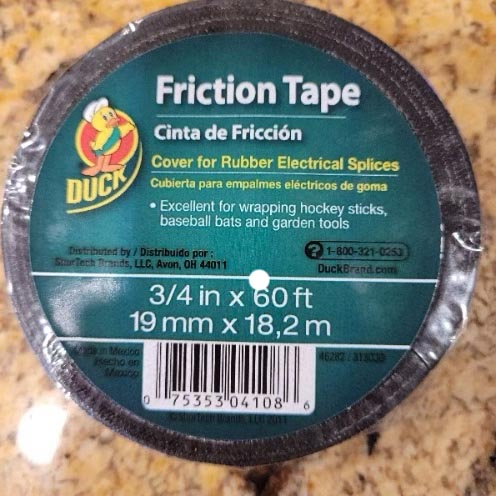
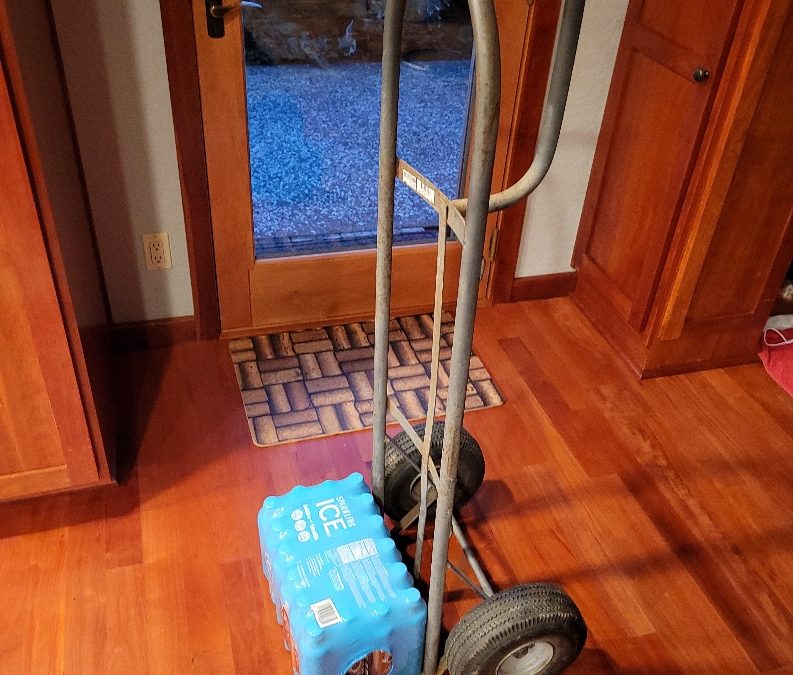
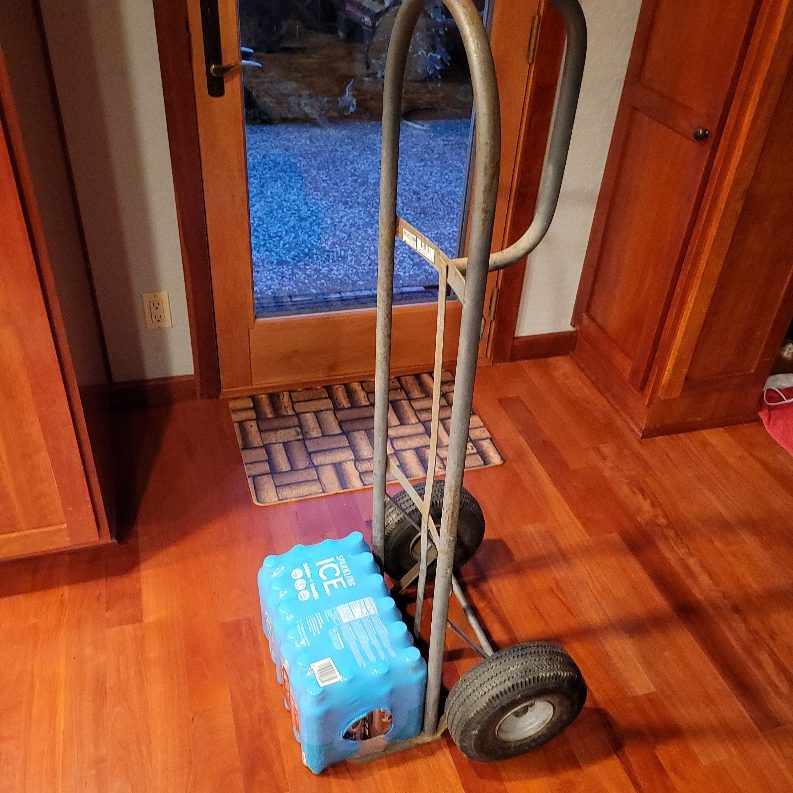 As we age, there is a corresponding loss of strength—at least that is what has happened with me. I find myself more frequently asking for assistance when tasked with loading heavy items into my shopping cart, whether it’s a 42 pound bag of cat litter at Costco, or the 3 cubic bag of Sunshine potting soil at Lowes. I even asked for help transferring the soil into the back of my car, and as it turned out, it was a female worker that did it. I hope your pride won’t keep you from asking for assistance when you need it.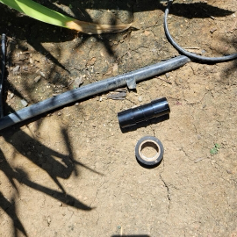
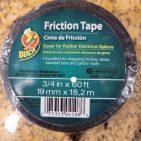
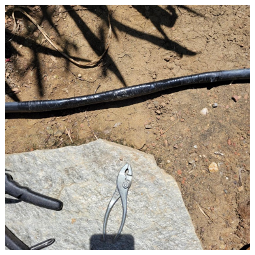 If you have a drip system in your garden, you will sooner or later have leaks. Most commonly these are caused by severing a half inch supply line with a shovel, but there are numerous other causes like critter damage. The tubing shown in the first photo was damaged by sun exposure over many years that left it brittle, and then being stepped on which led to severe cracking. You can see that I solved it with multi-layers of electrician