
Raising Mosquitos?
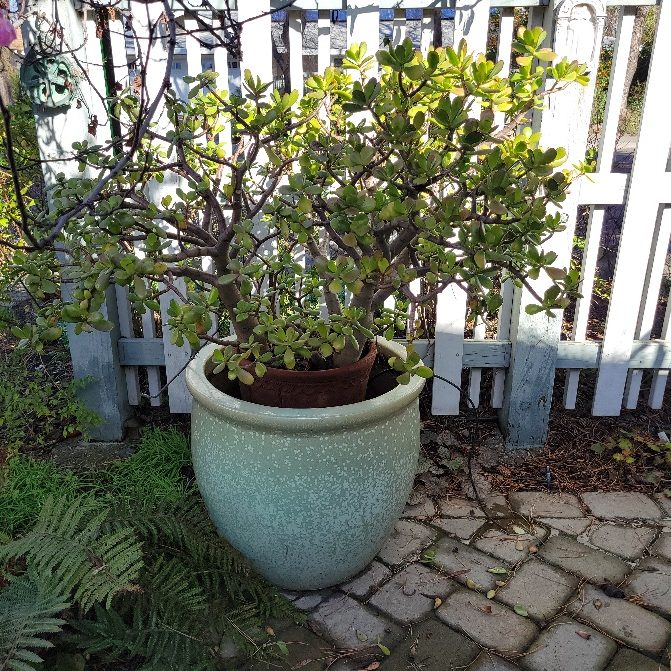
It’s a little late to warn you, because we are well into the rainy season when rainwater can collect in forgotten containers. The first photo shows a large green pot that sits out in the front yard. It contains a succulent that has been growing for years in a terra cotta pot that is raised on some bricks. After a rain, I have to siphon the water out.
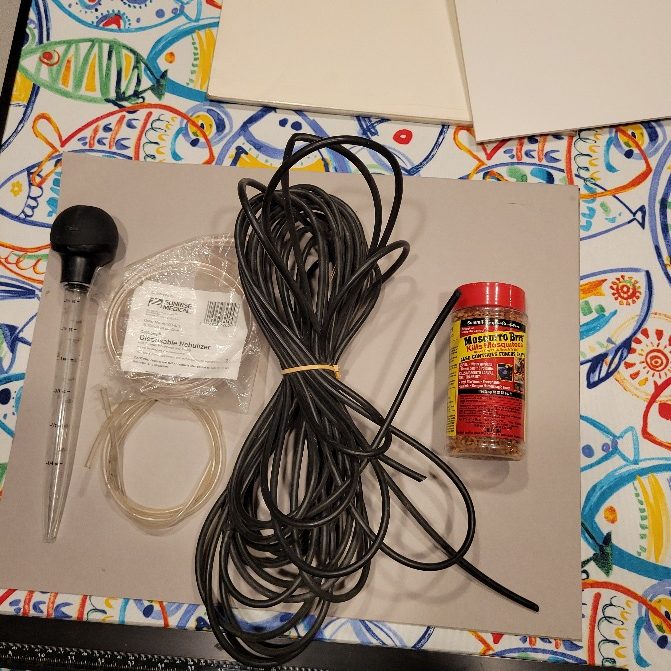
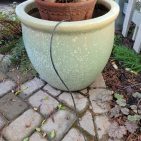 You can see in the second photo the 1/4 inch drip tubing that is currently removing water. Since there will always be some water remaining, I always sprinkle some “Mosquito Bits” into the pot. Ideally the tubing should be clear so you can see the water rising when you suck on the end to start the siphon. A mouthful of stagnant water is always an unpleasant experience.
You can see in the last photo the bunch of drip tubing. Using a turkey baster is another alternative if the container is small, and you are unable to spill water out. If raising mosquitos is not your goal in life, and if you want some assistance, let me know.
Stan, The Mosquito Killer Man
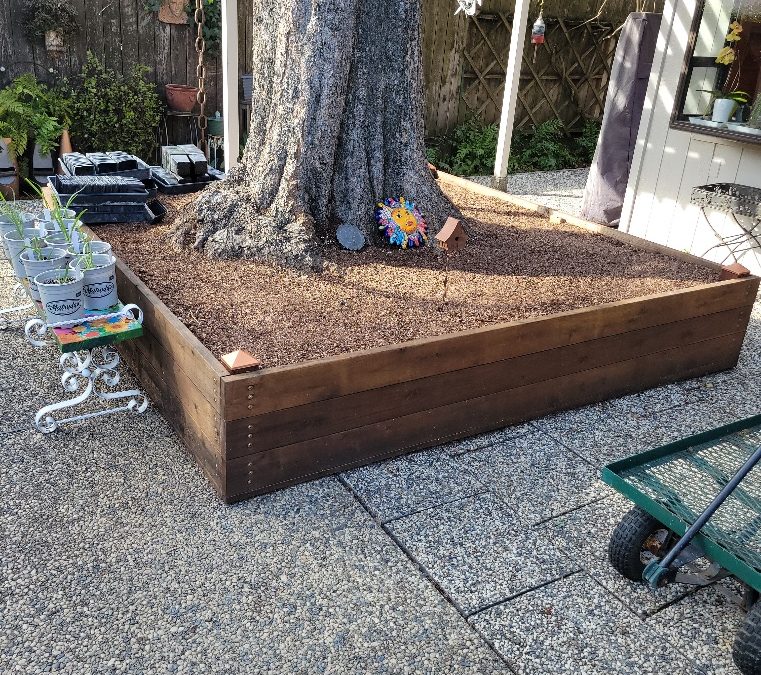
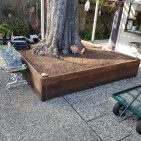 Here is another bit of advice I’m going to give you, even though you could care less. You can see in the first photo the box that surrounds the base of our huge hackberry tree. This is the third box that had to be constructed as the tree grew. We have decided this time to leave the soil bare in the box. The previous box contained potted geraniums and cyclamen around the edges that had been sunken into the soil. Over seasons, we discovered that tree roots invaded the pots through the drain holes and were sucking the water out of the pots as well as the nutrients.
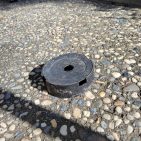 So, I dug the holes a little deeper and placed what you see in the second photo. This is the cut off base of a sturdy gallon pot with a large hole drilled in the center. When inserted upside down beneath the potted plant, this arrangement creates an air gap that roots won’t cross. So, there you have it—an idea for which you probably have no use. Interesting though, don’t you think?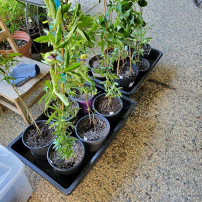
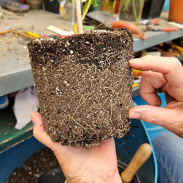 So, I guess the lesson for you is this: If you let a potted plant get really dry, watering so that the