by Stan Logan | Oct 5, 2020 | Garden tools
How is organic dumpster diving different from ordinary dumpster diving? Well, ordinary dumpster diving has been around for decades—ever since dumpsters have been created to store discarded items. Organic dumpster diving is a more recent activity allowed by the recent effort to keep organic materials out of the landfill. Now, searching through the contents of your organic bin may seem somewhat unpleasant, if not downright disgusting. However, sometime a dive seems imperative. Have you ever been working with a favorite tool, and after depositing plant clipping or weeds into your organic bin, that beloved tool has disappeared? After endless searches has revealed no misplaced tool, the fear slowly arises that you have thrown away your tool. This happened to me several days ago when my hand rake suddenly disappeared. So, I pulled the garden refuse out of my bin. No tool. Then I went over to my neighbor’s bin, to which I had added my excess, and pulled all the plant material out and into a garbage can. No tool. Now I must admit that most organic dumpster dives are unsuccessful. I figure the success rate is about 20%. And sure enough, I later found the hand rake lying on the back of the Prius in the driveway. I continues to amaze me how I will have absolutely no recollection of where I put something down.
So, I guess I’d have to say that organic dumpster diving is not something I think you’ll enjoy, but it is the only way that you can be assured that your treasured tool is not gone forever.
Happy diving (?)
Stan, The Tool Man
by Stan Logan | Sep 1, 2020 | Garden tools
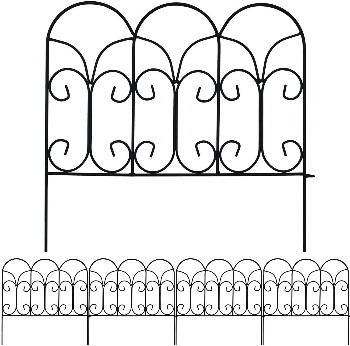
LaVille and I were poking in 36” fencing around a Rudbeckia that had grown crazy tall and threatened to bend over into a mess. Beneath that fencing was another grouping of 18” fence sections that were no longer effective. I was reminded of how often we have used the short fence sections. Here are several reasons you may want to consider a purchase. Frequently one plant will outgrow an adjacent one and shade it out. A single fence section can be placed between them to separate the foliage. Simply propping up a plant that is unable to support itself is useful. Plants can be held away from your lawn to prevent interference with mowing. You can create a safety barrier to protect plants when you drag a hose around the garden. Finally you can make a reminder barrier to stop human traffic. I can’t tell you how many mini sprayers I broke off by stepping across a planted area. A single section of fence stopped that. You might even want to spray paint a traffic stopper white to make it more noticeable.
If you purchase sturdy fencing, it will last a lifetime. I would suggest you avoid “wire” fencing as it may not have the strength or durability you require. Also pick a style that has a loop attached to one side. This is for joining sections together as you will slide the stake at the unlooped end of a second section though that loop. This means of attachment makes all kinds of articulation possible. The fact that sections can be separated make storage easier, and they can be stored out in the weather.
“So . . . Why the weird title,” you ask. Well, I just couldn’t resist. You see, if you were my age, that sentence would have more meaning. But then even if you are old, you may never have played cowboy and Indians, which of course would be completely unacceptable in current times. Still confused? Google “Don’t fence me in”, and you will be able to listen to a song of that title. Then you may ask LaVille who she sat next to on a fire engine in a parade when she was seven. You see, her dad had a lot of pull those days in Imperial Valley.
A lot of fencing examples can be found on Amazon—just google “garden fencing”. I think 18” by 18” panels are the most practical size.
Hope to hear you singing those familiar lyrics the next time I see you.
Stan, The Singing Cowboy (I wish)
Wire Fencing
by Stan Logan | Sep 1, 2020 | Garden pests, Garden tools
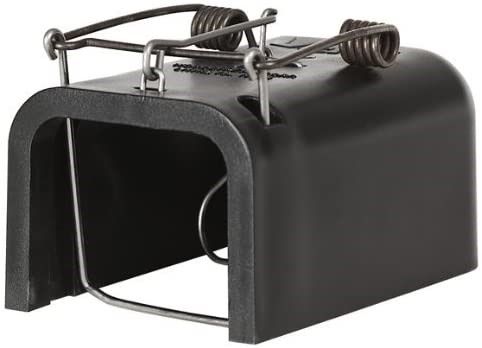
Thankfully, gophers are not a problem for me. But since several of my gardening friends are constantly fighting against these little demons, I thought I would spread what I have learned from others. Gopher killing products are found in nurseries, big box stores, and hardware stores. The most common product is poison bait. The use of bait is discouraged because the secondary poisoning effect. If another animal eats the killed gopher, the dog, coyote, owl, or whatever, will be likewise poisoned. Probably the preferred gopher killer is the Black Box trap by Victor. There is a very effective You Tube video produced by Dirt Farmer Jay who demonstrates how to use this trap. He will also show you how to use a flare device that emits poisonous smoke. Still another method is to use propane gas. Run a hose from a propane tank into a gopher run and that will poison the gophers. I have also heard that it is effective to attach a hose to the exhaust of a riding mower and lead that into a run. I’m not sure if these last two are legal. But whatever your technique, I have sympathy for anyone with a gopher problem. They can do a devastating job on a garden you have worked so hard to create. I have included a picture of the Black Box.
Stan
Gopher Trap
P.S. You know, if you are planning raised beds, you might want to lay down hardware cloth first. This is a layer of wire mesh that has ½ in holes in it. That would at least keep gophers out of your box.
by Stan Logan | Jul 14, 2020 | Garden tools, Irrigation
I think each of us battles with hoses and faucets that drip. When a faucet drips, it’s generally a leak that occurs at the base of the handle stem. You will probably notice that the handle is really easy to turn. What is supposed to seal the handle stem within the faucet is what is called a pressure washer. Over time these tend to shrink so that they no longer seal well against the stem. What you need to do is get an adjustable wrench and tighten the large nut at the base of the handle stem. This nut is probably “frozen” so you may have to use considerable force to tighten it. Hold the faucet firmly with your other hand to prevent damage elsewhere. Tighten the nut until the faucet handle is still easy to turn.
Many hose leaks occur where the hose attaches to the faucet. If you replace the rubber or plastic washer in the female fitting, your leak will generally be solved. Grab the old washer with pliers—a needle nose works best–and pull it out. Insert a new washer. If the hose end still leaks, try tightening it further. A channel lock wrench works well for this. If the leak continues, you may have to replace the female hose end. Washers and replacement hose ends are common in nurseries and hardware stores. Make sure though that you buy the proper size end replacement for your hose size—3/4”, 5/8”, or ½”. You may also choose to buy a new hose particularly if the old one is constantly kinking. Here I would advise you that you get what you pay for. Make sure that you are getting the right length to fit your needs—too much hose can be a pain also.
Now that I think of it, hose leaks frequently occur at the other end where you attach a sprayer of some kind. Here, again, the problem is generally the washer. If replacing the washer doesn’t help, check the end of the male hose fitting. If the surface that meets the washer is not smooth, you will need to flatten the end surface with a file. If the male hose end cannot be repaired, replace it noting the advice a gave you above. Of course, if the leak is within the sprayer attachment, it is time for it to go.
Stan, The Blog Man
P.S. LaVille, my editor, mentioned that the biggest problem with leaks is that your shoes get wet and can sometimes be ruined. So this is a very serious matter!
by Stan Logan | Jul 14, 2020 | Garden tools
I was out in the garden today doing maintenance. That’s my job. LaVille does the creating, and I try to do the maintaining. So I am deadheading—mainly Lantana—and it occurred to me that the job would be easier if I had a tool that would fit over my thumb and allow me to pinch off spent blooms. After lunch and the daily nap, I decided to see if there was actually such a tool, I googled “thumb garden pruner” and discovered that there were several models available. When I found they were available on Amazon, I went to the site and read over the comments on different brands. I chose a brand that offered a size option since my fingers definitely fit the large category—besides it was “Amazon’s Choice.” So my thumb knives will arrive in a couple days and I’ll give you a person evaluation.
Thumb Knives
I would give this device 4 out of 5 stars. My first problem was that I had trouble inserting my thumb. Although I ordered the “large” version, it was too snug. Perhaps it is designed for a woman’s large thumb—and indeed it fits LaVille’s thumb just fine. I measured the circumference of my thumb and it was 3 1/8 inches. Now before you call Guinness World Records, let you remind you that this is circumference. Remember how you get diameter out of circumference? Dividing 3 1/8 by 3.14, you get 1 inch. See—no freak here. So maybe that gives you some idea of the size you need. Anyway, as I tried to pull the device on, it separated. Re-attaching the two parts was a challenge, but I succeeded. The first plant I attacked was a gazania that had gone crazy with blooms. For a long time I attempted to severe the flower stalks by pinching between the thumb blade and my sleeve protected forefinger. It didn’t take too long for my forefinger to get sore. I thought that the thumb knife would be used in the same manner that I had used to deadhead by pinching my thumbnail against my forefinger. I discovered that no pinching is needed. You simply twist your wrist downward so that the knife edge presses against the stalk. So why is this device better than what you have been doing forever? First, you can cut the stalk deep in the plant by sliding your hand down the stalk. Then, since the cut stalk in already in your hand, you can simply move to another stalk without using your other hand. Also, since you are using only one hand, you don’t have to bend over as far to get both hands involved. Now I have to tell you that LaVille loves this tool. She was even using it without the forefinger sleeve. She said that in some instances she used the cutting edge to slice through a bunch of stalks she had gathered in her other hand. So she would rate the thumb knife 5 stars. If you choose to use the thumb knife, eventually it will lose its razor sharp edge. I can sharpen it for you if that ever happens. I guess I’ll have to say it’s “thumbs up” for the thumb knife.
Happy deadheading, Stan The Tool Man
