by Stan Logan | Nov 19, 2020 | Trees
I can almost hear you screaming: “I suppose you hate oxygen as well!” No. I don’t hate oxygen—I love oxygen. And I appreciate the fact that 28% of the oxygen we breathe comes from trees—particularly trees of the rain forests. (If you don’t know the source of most of the Earth’s oxygen, you will have to do some sleuthing.) Now that I hopefully have you hooked, let me ask you this: Don’t you actually hate trees when Fall arrives and the leaves cascade endlessly into your yard. If it’s not your trees, it’s the trees of your neighbors. Perhaps I’m under particular duress. We have a huge hackberry tree that we planted at the southwest corner of the house 50 years ago. I can accept the cost of the systemic that I have to apply each year to combat the wooly aphid. With reluctance, I accepted the bill of $1050 for thinning the tree a month ago. And I appreciate the shade that the tree provides on hot summer days. But what I don’t appreciate or accept is the mess created every year come about Thanksgiving time—no thanks for giving me all those leaves.
Now you’re probably saying: “Why don’t you simply regard those leaves as valuable additions to a compost pile. First of all, I have no room for a compose bin. Every square foot of my back yard is already occupied. Second, I have tried composting in the past and was a complete failure. Every year all leaves are piled in the street to be picked up by the claw and then composted by someone who knows what he is doing.
Perhaps you think I may of a touch of OCD. You are probably correct. I remember going around the yard with a vacuum cleaner and picking up hackberry leaves one at a time. Well, those days are long gone. I get great satisfaction in mowing up all the leaves that fall on the lawn. I guess I’m just a cleanaholic. Since it seems that’s not all bad considering how much of our waking hours is spent cleaning something—whether it’s your car, your house, your dishes, your clothes, your teeth, or . . . you know what else.
I don’t really hate trees all the time. ‘tiz the season.
Stan, The Not A Tree Hugger Man
P.S. My editor says I’m just a Leaf Grinch.
by Stan Logan | Oct 30, 2020 | Irrigation
I have always been cheap. My wife has been working on me to change this attitude for 50 years now, and I must admit that she has largely been successful. I still, however, really resist throwing anything away. It’s not that I am a hoarder, I just find extreme pleasure on finding a use for an object after I have saved it for years. I have junk drawers that are a challenge to close. This cheapness applies to tools as well. For instance, I am still using the wheelbarrow and sawhorses my dad (who was a contractor) gave me nearly 50 years ago—and they were old and beat up then!
Anyway, this impulsion to save stuff has resulted for instance in collection of old soaker hoses and pieces of soaker hoses that fill a garbage can. I’ve now decided that the garbage can is the best destination for this accumulation. You see, our main iris garden was watered by a variety of soaker hoses—different sizes and different ages. The result was very uneven watering—some parts were completely dry, some parts over watered, and there were frequent squirts here and there. LaVille would have to drag a hose through the garden and water everything every week. After listening to several complaints (she is careful not to nag), I finally decided to bite the bullet and buy new soaker hose. I was looking for ½ inch hose everywhere, but only found 3/8”. Interesting enough, I found the same brand at every store. For instance, the 50 foot SoakerPro by Element was about $17 at Home Depot. However, the same hose was $5.72 at the Lowes in West Sacramento. I jumped on that one! In fact, I bought two.
The hoses were easy to install. I first unrolled the coils and twisted it to take out all of the loops. Then as I dragged it through the garden I pinned it using “U” shaped wires made from coat hangers that I had been saving. When I turned on the water, I couldn’t believe how well the water was distributed. I bet this system could also be used to water lines of potted plants if they were, say, all one-gallon pots.
So, if you find that your soaker hose is squirting rather than dripping, head for West Sacramento. Don’t be cheap and take the hose out in the street and run over it with the car—which is the old, recommended treatment for soaker hoses that get clogged by minerals. You will love how much better a new hose works.
Happy dripping!
Stan, The Tool Man
by Stan Logan | Oct 30, 2020 | Garden tools, Weeds
Do you remember that day in high school biology when you dissected a night crawler? If you don’t, let me tell you that it is an earthworm about 7 inches long. You used your scalpel to carefully cut in incision in the dorsal surface at the anterior end. Then using a probe, you scratched at the tissue of the wall segments and pulled back and pinned the body walls to the wax of the dissection tray. Further scratching with the probe finally revealed the brain which consisted of two connected tiny white lumps lying on top of the esophagus. We called this process teasing, and I am reminded of my first dissection back in 1957 whenever I am fighting the oxalis growing in my lawn. I only have a few spots where oxalis insists on returning. Several years ago. I removed 8 square feet of lawn that was hopelessly infested with this weed. I thought I had eradicated it, but 2 or 3 areas continue to be a problem.
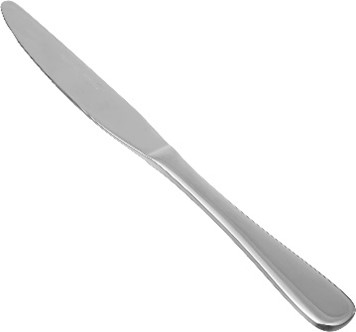
So weekly, after each mowing, I get down on my hands and knees and use a teasing technique to remove any oxalis before it has a chance to go to seed. The tool I use is a dinner plate knife because is it rigid, narrow, and had a dull rounded end. I grab the oxalis by the neck (not really the neck) and pull gently. At the same time, I tease (scratch) the soil where I figure the root is located. Generally. the root gives way and another plant bites the dust (so to speak).
I figure that I have a right to tell you about this experience because it does involve a tool, albeit a tool with very limited use. By the way, this is also the tool I use to spread peanut butter in the rat traps that I try to keep baited year-round.
I guess the one question remains—will I be able to completely tease the oxalis to death—or will it outlast me and tease me to death?
Stan, The Tool Man
P.S. My editor says the last line is a little grim.
Table knife as garden tool
by Stan Logan | Oct 11, 2020 | Safe Gardening
Have you recently been frustrated by having more garden refuse than your bin can hold? This has been my case in recent weeks as fall approaches and I have increasing amount of debris to get rid of. I have found that by climbing into my bin, and jumping up and down, I can compress the plant material into a much smaller volume. Now although this activity is a lot of fun, there are several dangers of which you must be aware. The plant material itself can be a threat if there are sharp pokey things that might penetrate your legs. Then too, the act of climbing into or out of a bin creates the possibility of a tumble. Then too, if you compress the plant material too low, you may not be able to escape. But I guess that’s OK since it’s an organic bin, and you are definitely organic. Sounds like a gruesome episode you might watch on TV about a missing person. Yuck.
I hope that you don’t have to face the weekly volume problem of garden refuse like I do. The City of Davis doesn’t do street pickups for 6 straight months! In any case, perhaps you should leave dumpster stomping to a local neighborhood child. They would probably love it.
Stan, The Tool Man
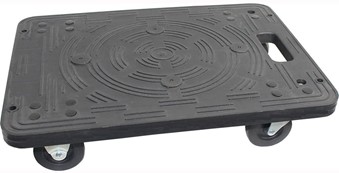
Polypropylene Dolly
by Stan Logan | Oct 10, 2020 | Safe Gardening
Have you recently been frustrated by having more garden refuse than your bin can hold? This has been my case in recent weeks as fall approaches and I have increasing amount of debris to get rid of. I have found that by climbing into my bin, and jumping up and down, I can compress the plant material into a much smaller volume. Now although this activity is a lot of fun, there are several dangers of which you must be aware. The plant material itself can be a threat if there are sharp pokey things that might penetrate your legs. Then too, the act of climbing into or out of a bin creates the possibility of a tumble. Then too, if you compress the plant material too low, you may not be able to escape. But I guess that’s OK since it’s an organic bin, and you are definitely organic. Sounds like a gruesome episode you might watch on TV about a missing person. Yuck.
I hope that you don’t have to face the weekly volume problem of garden refuse like I do. The City of Davis doesn’t do street pickups for 6 straight months! In any case, perhaps you should leave dumpster stomping to a local neighborhood child. They would probably love it.
Stan, The Tool Man
