by Stan Logan | Mar 19, 2020 | Garden tools, Safe Gardening
Kneeling Bench
Not all of us are comfortable kneeling, but playing in the garden often requires it. My kneeling days are numbered, even though I’ve been protecting my knees with knee pads for years. In fact, I have a set for indoors and a set for outdoors. I wear knee pads so much that I just keep them on when I nap in the recliner between play sessions.
An alternative to wearing knee pads is using kneeling pads—one inch thick pads of soft material that you place between you and the ground. We must have 3 or 4 around here. I’ll grab one for LaVille when I catch her kneeling on a hard surface. These pads are fine to use, but when you move around a lot, like when I’m chasing weeds around the yard, it’s a nuisance to carry the pad with you.
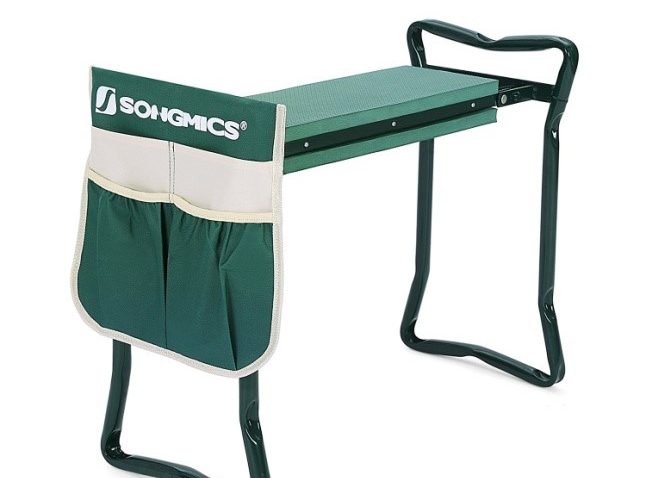
Here, for you persistent kneelers, is a device that you may wish to purchase and use. It’s a seat bench that can b e turned up-side-down and then used as a kneeling pad. Look at the attached picture to see what I mean. You can work while bending over from the bench, or you can kneel when it’s flipped over. Perhaps the best feature is the fact that you have 2 supports on the sides that will help you get up—which is the hard part. Do you remember that the main reason for using a rigid plastic bucket when weeding was that you could use it to help you get up? An additional feature is that the legs can folded in for storage.
There is a variety of kneeler benches at Amazon for less that $40.
If your knees could talk, they would thank you. The side supports may just be the feature that will save you from taking a face plant into the garden—and nobody likes to grow face plants.
Keep on kneeling,
Stan, The Tool Man
by Stan Logan | Mar 19, 2020 | Garden tools
power washer
I really like to clean. One of my favorite chores is to do the laundry. Polishing silver is great fun. I used to collect antique wooden pulleys. I would clean them up and refinish them to make them look new. Of course, that reduced their value, but I didn’t care. I actually like to weed—it’s just another form of cleaning. I could go on and on, but I think you get the idea.
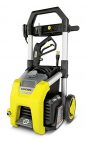
Today, my favorite cleaning tool is the power washer. I use it so frequently that it is always connected and ready to go in the back yard. Here are some of the things I have cleaned in the past with a power washer: used clay pots, a bird bath, water barrels, large tools I have bought at garage sales, sidewalks and pavers, windows, kids’ riding toys, cars, the barbeque, the organic, garbage, and recycling bins, and shovels and tarps after use. After the rainy season, I’ll go around and clean off all the dirt and debris that rain has splattered up on the house and planter boxes.
I hope you have thought of ways you could use a power washer. I strongly suggest that you get an electric model—not gas. Realize that you will have to be able to plug this device into an electrical outlet and attach a hose. When you move this device around your yard, you will be dragging also three lines: electric cord, hose, and tubing that leads to the spray wand. So some strength and patience is required.
Many different models are available on line and in big box stores. You shouldn’t need a power washer that puts out more than 1800 psi (pounds per square inch). My old one only puts out 1350 psi and it has been sufficient for almost everything.
So if you are a cleaning freak as I am, this is the tool for you.
Happy cleaning!
Stan, The Tool Man
by Stan Logan | Mar 19, 2020 | Garden tools
rake
You say, “What possibly could be said about a rake?” Well, let’s see what I can come up with.
You must realize that there is a tremendous variety of rake designs. Years ago my favorite was the bamboo rake. It was light weight and the tines nicely flexible. Years later I used a plastic rake to gather piles of leaves in the neighborhood streets for the “claw” to pick up. It served its purpose well until I realized that raking the street ground down the tines until they no longer had hooks at the ends. You may have seen the rake contraption that closes on the leaves so they can be picked up. I haven’t tried that one yet because it looks too heavy to use for long periods of time. As of late I have settled for a lightweight metal rake that I actually paid retail for at Davis Ace. It’s one of the few tools that I didn’t get at a garage sale. It seems every time I come across a metal rake at a garage sale, it is in really rugged condition. This is probably because they last so long. The metal rake works well in my yard and also the street. I recently found that large leaves like magnolia leaves can be picked up when they get imbedded among plants by stabbing the tines through the leaves.
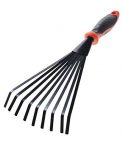
While working at an iris garden recently, I was wishing I had brought along one of my old favorites—a hand rake. Mine is 17 inches long with a tine spread of 5 inches. I used to use it a lot when I was more OCD than I am now. (At one point I was sucking up every last hackberry leaf with a vacuum cleaner—sick.) If you have a situation where leaves get amongst your plants, and you tend toward OCD, consider purchasing a hand rake.
Another unusual use for the hand rake is to assist you in removing aphids from plants when using a hose sprayer. By supporting a branch from behind with the rake, the branch won’t bend away from you and practically all the aphids will be blasted away.
Hand rakes are a common item at nurseries and are quite cheap at Amazon.
You know, it’s OK if you are OCD if it makes you happy.
Stan, The Tool Man
by Stan Logan | Mar 19, 2020 | Garden tools
Soil Scoop
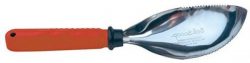
Here is the perfect tool for potting plants. You are probably using a small bucket or can to fill a new pot for transplanting. Try this tool instead. The comfortable grip of the soil scoop gives you good leverage and the concave shape allows you to quickly transfer soil from a bag or bin. You may wish to use this tool to form furrows in your garden and the serrated edges can also perform cutting action when roots are encountered. The metal scoop is stainless steel so your tool will maintain a like new appearance. The soil scoop is produced by Garden Works and can be purchased for less than $16 on Amazon Prime.
Happy scooping,
Stan, The Tool Man
by Stan Logan | Mar 19, 2020 | Garden tools
Auger
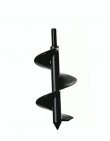
Even if you will never plant a bulb for the rest of your life, you may find a planting auger a useful tool. It is basically a drill bit that will drill large holes into the ground. It comes in a wide variety of lengths and widths, so you can pick the size that best fits your needs. For instance LaVille says that she likes to place daffodil bulbs in a hole that is 6-8” deep, with a little extra depth to mix in bone meal. Recently we were able to plant 56 bulbs in about 40 minutes.
A more general use for a planting auger is simply to loosen soil. If you are trying to plant in an area of your garden that has really hard soil, you can use an auger to drill several holes over a small area just so you can manage digging. Where you may have turned to using a pick axe, it will be much easier to use the power of a drill to fight through the spoil.
Another use for the auger is to aide you in removing a plant from large pots. A great number of large pots are constructed to be narrower at the top. If a plant becomes literally pot-bound, you can use an auger to drill holes around the edge of the pot until the plant and soil can be removed. That is a better option than simply breaking the pot to save a valued plant.
It really is amazing to discover how fast these augers work. But since they use a lot of energy, you may need a corded drill if you have a great number of holes to drill.
You can order a planting auger by googling that term. Amazon has a wide variety of augers at a wide range of prices.
Happy drilling!
Stan, The Tool Man
by Stan Logan | Mar 19, 2020 | Garden tools
Helping Hand
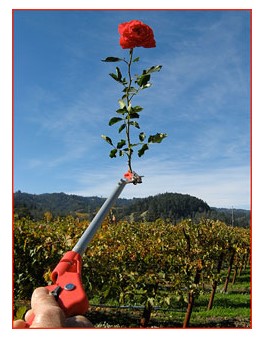
If you have no roses, berry plants, bougainvilleas, or flowering quince, you may want to skip this article. The tool of the month is a device that allows you to prune without touching the plant with your hands. It will sever a branch and grasp it at the same time. There are several models that will reach out different lengths, I found one that has a length of 2 feet. To quote the ad: “Ultimate rose harvester, fruit and vegetable picking, pruning, dead heading, reaching into flower beds without compacting the soil. Eliminates the ladder.” Well the syntax sucks and my ladders are not going to be eliminated, but if you like to show off to your neighbors, this may be the tool for you. You can find a large selection of cut and hold pruners on Amazon for as little as $28 for a Corona.
by Stan Logan | Mar 19, 2020 | Garden tools, Irrigation
Garden Timer
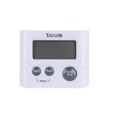
I know you have run a sprinkler or hose in the garden and expected to remember to turn it off in a certain time. If you remembered 90% of the time, that would be remarkable. It’s the 10% when you forget and waste all that precious water when you have fought so hard to save every drop. The tool that will remove this frustration is the garden timer. So, you’ve never heard of a garden timer? A garden timer is a device otherwise known as a kitchen timer, but when you are in the garden, it’s a garden timer. I used to carry one of those timers that you twist to set a certain number of minutes. It took a large sweatshirt pocket to house this device. Then I saw the very small digital timer sold in the kitchen gadget section of Target. For about $7, you too can own your own tiny timing device. Perhaps you would be more comfortable calling his tool a “personal timer” because there are some many instances in your daily routines that require reminders.
Now I know most of you have a smart phone, and it is easy to tell it to set an alarm, but I think it is easier to use this tool to make you a more responsible person in your garden and in your personal life.
Trying to reduce your regretful moments,
Stan, The Tool Man
by Stan Logan | Mar 19, 2020 | Garden pests, Garden tools, Irrigation
bucket
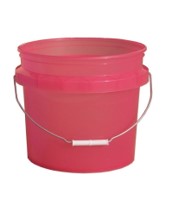
Body count tonight: 57. I remembered just before going to bed that the snails would be out in force since it rained a little today. I grabbed a flashlight and my snail masher from behind the front door. It consists of an old cut off flagstaff with a 2 x 2 block attached at the end. The grandkids use it when they visit and earn 5 cents per snail killed.
I don’t understand why snails come out from their leafy protection and crawl around exposed on pavement and pavers. I actual feel guilty murdering helpless snail after snail. You really can’t call the exercise “snail hunting” because that would indicate that some sort of sport would be involved. Perhaps, if you were a snail hunter, you shouldn’t be able to kill a snail unless it is in flight. LaVille said that she’s seen snails take flight. She and her siblings would visit an aunt in Salinas and collect snails and then return home to Calexico where they would place them on hot pavement to see how high they could fly. Perhaps snail hunting should be restricted from ½ hour after sunset to ½ hour before sunrise. Snail hunting season would be limited to the winter months. You wouldn’t want to kill snails during their breeding season. Of course no artificial light source could be used. To make the sport more fair to the snail, size of the snail masher could limited to a ¼ inch diameter rod. Naturally no snail with a shell diameter less than 1 inch could be harmed. Chemical products of any sort would be outlawed.
I’m considering starting a club called “Snails Unlimited”. Would you like to join me in protecting the lives of these helpless mollusks. Let’s ensure that the sport of snail hunting is available to be enjoyed by future generations.
Stan, The Snail Killer
P.S. LaVille suggested an addendum was needed here:
When we had rounded up a significant collection of these hermaphroditic herbivores, LaVille would take them into her classroom and distribute them in small paper bags as pets to her students for responsibility training (for the kids). Then periodically she would hold races on the overhead projector by placing these snails in the center to see which sprinter could reach the periphery first.
I have to caution you however: Do not store your collection of snails in a paper bag. They will eat their way out and you will find estivating snails all over the house for weeks. Trust me
by Stan Logan | Mar 19, 2020 | Garden pests
Body count tonight: 57. I remembered just before going to bed that the snails would be out in force since it rained a little today. I grabbed a flashlight and my snail masher from behind the front door. It consists of an old cut off flagstaff with a 2 x 2 block attached at the end. The grandkids use it when they visit and earn 5 cents per snail killed.
I don’t understand why snails come out from their leafy protection and crawl around exposed on pavement and pavers. I actual feel guilty murdering helpless snail after snail. You really can’t call the exercise “snail hunting” because that would indicate that some sort of sport would be involved. Perhaps, if you were a snail hunter, you shouldn’t be able to kill a snail unless it is in flight. LaVille said that she’s seen snails take flight. She and her siblings would visit an aunt in Salinas and collect snails and then return home to Calexico where they would place them on hot pavement to see how high they could fly. Perhaps snail hunting should be restricted from ½ hour after sunset to ½ hour before sunrise. Snail hunting season would be limited to the winter months. You wouldn’t want to kill snails during their breeding season. Of course no artificial light source could be used. To make the sport more fair to the snail, size of the snail masher could limited to a ¼ inch diameter rod. Naturally no snail with a shell diameter less than 1 inch could be harmed. Chemical products of any sort would be outlawed.
I’m considering starting a club called “Snails Unlimited.” Would you like to join me in protecting the lives of these helpless mollusks. Let’s ensure that the sport of snail hunting is available to be enjoyed by future generations.
Stan, The Snail Killer
P.S. LaVille suggested an addendum was needed here:
When we had rounded up a significant collection of these hermaphroditic herbivores, LaVille would take them into her classroom and distribute them in small paper bags as pets to her students for responsibility training (for the kids). Then periodically she would hold races on the overhead projector by placing these snails in the center to see which sprinter could reach the periphery first.
I have to caution you however: Do not store your collection of snails in a paper bag. They will eat their way out and you will find estivating snails all over the house for weeks. Trust me
by Stan Logan | Mar 19, 2020 | Garden tools
I was thinking about you again. This time I was walking around my neighborhood using a backpack leaf blower to clear the driveways and sidewalks of debris. Practically every Monday late afternoon, I blow the neighborhood in preparation for the street sweeper who comes around at 7:30am on Wednesday. I used to do the sidewalks a quarter mile down Mace Blvd. also, but when someone complained one day of the dust storm I was creating, it sort of took all the fun out of it. Then, too, my knees just aren’t what they used to be.
Anyway, the idea of doing an article on leaf blowers arrived in late January when there were still a lot of deciduous leaves to gather up. So it was too late to advise you on leaf blowers when they were actually needed. But then, timing has never been my strong suit. When the March edition of The Family Handyman discussing garden tools arrived, I just had no choice but to pen an article.
You first have 3 choices: cordless, corded, or gas powered.
If you are able to blow your yard in 15 minutes, you might want a battery powered blower. If a manufacturer claims a user life of one hour, that may be true only if the machine is used at the lower power. Compare the specs in wind speed in mph and the air voume moved in cubic feet per minute. Handle the blower with the battery attached for weight and balance comparison.
A larger yard might use a corded model. These have lots of power. Once again handle the tool. If your yard has fences, you will find it convenient to hold the blower up vertically to blow leaves away from the fence. So weight is a big consideration. If your yard is complicated, dragging cord behind you may be a real inconvenience. An electrical cord can do a real job on those plant labels other than simple cut mini blinds. If you need to buy a cord, get one that is long enough and light duty. Don’t worry about having a vacuum adaptor—I have had no luck with this action.
Gas powered models can either be hand held or in a backpack form. These are really convenient to use. Hand held models weigh about 9 lbs. Gas powered blowers tend to be noisy, so hearing protection is a must. You will need a separate gas tank in which to mix 2-stroke oil with you gas. If use is infrequent, use a gasoline stabilizer. Some communities have restrictions on gas leaf blowers, so check before you purchase. (Davis has threatened to eliminate them entirely.)
There are other uses for a blower than simply moving leaves. Cleaning roof gutters is one great use. A leaf blower works wonderfully for blowing water off yard furniture after pressure washing. We have an intricate metal sculpture that I haul outside, spray, and then blow dry with a leaf blower. Need a fast car interior clean up? Open all the doors and blow all the trash out the other side. Cobwebs on the outside of your house—not for long!
There you have it. That’s the best advice I can offer. If you take the plunge and become a blow person (p.c for blow man), let me know about your thrill of having all that wind power at your finger tips.
Stan The Tool Man (aka Stan The Blow Man)
P.S. As of 2019 I no longer blow leaves from neighbors driveways into the street. That is now illegal in Davis unless you are forming piles—and that has to be done within a week of street pickup, which has become far less frequent. Just as well—my backpack blower died. Knees are good though.
