by Stan Logan | Jan 19, 2021 | Weeds
Generally it is a pleasant experience being on a gardening team. I know Daisy would back me up on this concept. But there are times when disagreements can arise—specifically, what plants need to be eradicated, and which are left to survive—what’s a weed and what’s not. You have heard the saying that it is easier to ask for forgiveness than to ask for permission. I have found that this axiom doesn’t work well when weeding in the garden. You see, once a plant is extracted, survival upon replacement is seldom successful. I have found that saying “You should have been watching what I was doing!” does not go over well. Or “It looked like a weed to me” doesn’t fare well either. I have found that frequent asking of permission has proven to the least painful option when weeding. I’m just sayin’.
Stan
by Stan Logan | Jan 18, 2021 | Garage and estate sales, Garden tools
I don’t know if you remember, but several times I have emphasized the importance buying tools that are as light as possible—as long as it doesn’t affect the quality or effectiveness of the tool. This would apply particularly to shovels and brooms. This fact was brought to mind when I recently received a birthday gift from one of my sons. This shovel arrived in a box from Lowes that was so mangled and mashed, that you wouldn’t think anything inside could have survived, but survived it did. Now, this 48 inch Cobalt steel digging shovel is really substantial—no wonder it survived. The handle is steel and the step flange is wide which is advertised to not hurt your foot (like I’m going to be out digging barefoot or in flipflops—come on!). Anyway, the point is that this shovel is heavy. Every time I heft the shovel, I am lifting the weight of the shovel as well as its load—wasted energy. This shovel is so substantial that it comes with a lifetime warrantee. If I didn’t know this son better, I would suspect that he has sights on this tool in the end, if you know what I mean. In the meantime, the shovel is awaiting a significant sharpening as the shovel blade is really thick.
Boy! When I digress, I don’t go halfway. I am trying the make the point that several tools are better when they are light. This is particularly true with leaf rakes, which you use by constantly swinging them back and forth. I am in love (not really) with a rake I found at a garage sale. It is the Blue Hawk 24 inch leaf rake. The Blue Hawk series of products are entry level tools from Lowes. The handle is made of light wood. The rake head is light plastic, and only the tines are metal. I found by accident that you can actually improve this rake. One day I was too lazy to pick up the rake from the lawn and thought I could pass over it without harm. The mower ripped off 4 of the tines on one side. (I never did find the tines.) I used this lopsided rake for many months until I came up with the idea of removing 4 tines from the other side by sawing through the plastic head. Now, through serendipity (stupidity) I have a long handled, narrow headed rake with long tines that is able to remove leaves from tight confines. Since then, I was able to buy another Blue Hawk at another garage sale, so I have a full-size rake as well. So, my suggestion to you is that, if you need a rake, go to Lowes and pick up one of these light-weight beauties for about $10. Then, if you want to improve your raking capability, buy a second one and cut off tines from each side. You can skip the mower part.
Happy raking! Stan The Tool Man
by Stan Logan | Jan 17, 2021 | House plants
Today I asked Rhonda to clean the house floors while I worked out in the garden. When I returned inside, I could not find her anywhere. What I did discover was several pots of plants that were knocked over. The leaves of the swiss cheese plants had been beat up so that the isolated leaf holes now extended to the mauled leaf margins. Rather miffed, I found Rhonda hiding under our bed entrapped in electrical wires. So I extracted her, dusted her off, and took her to her corner so she could recharge her system and hopefully be a more trustworthy worker in the future. Oh . . did I forget to tell you Rhonda is our Rhumba?
Stan
by Stan Logan | Nov 28, 2020 | Garden tools, Trees
Perhaps a dozen years ago, LaVille and I planted 12 different fruit trees. We followed the advice of the Dave Wilson Nursery and planted them in 3 groups of 4. There were 4 cherries, 4 nectarines, and a group of 3 pluots with a plum. Each group was growing on the same root stock. The planting pattern was a square with trees 2 feet apart. The goal is to have 4 stunted trees with a varied ripening sequence. Trees were pruned to keep the center of the group open and the height limited to a comfortable harvesting level. Sounds promising, right?
The nectarine trees never produced decent fruit. It may have been related to the fact that I was never able to control the peach leaf curl. So after probably 5 years, I removed them. This wasn’t too difficult, because the root systems weren’t huge.
The cherry trees were doing just fine. Sure, the jays took their toll, but we did have days of human grazing. Then the spotted wing drosophila arrived. The treatment was to apply a spray every 5 days beginning as soon as the fruit showed a blush of color. A couple years of futile effort lead to tree extermination. This was not easy as the biggest trunk was probably 8 inches across. My tools this time were a hand saw, shovel, and hatchet. I won the battle, but there were times when the desired outcome was in doubt.
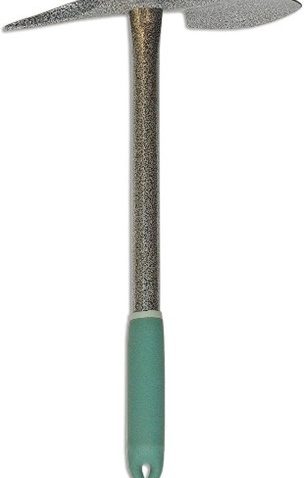
The 3 pluots and plum trees produced mixed results. The Montgomery plum was just OK. 2 of the pluots produced very little fruit. The Dapple Dandy produced an abundant crop each year. The fruit was large and had a marvelously tasty, sweet flavor. Then disaster struck. Remember that the center of the group is pruned to keep it open, so all of the fruit is produced on the outside of the grouping. Well, even after extensive fruit thinning, the Dapple Dandy had so much fruit on one side, that the trunk cracked open. That was also the straw that broke the camel’s back. All 4 trees were sentenced to termination. Being now an experience henchman, I added 2 tools to my arsenal. Most importantly was the reciprocating saw. It easily chopped off branches and shortened the trunk. It was indispensable for cutting through the roots which were large and intertwined with the roots of the other trees. Not only that, but unlike the cherry trees, these trees had a tap root which required me to excavate extensively to gain access to them. I found that a planting pick was useful for clearing soil away from roots to expose them for the saw blade. It is unavoidable to keep the saw blade away from the soil. I fortunately had bought a package of 5 9” blades, because the soil really dulled them fast. You can tell a blade needs replacing when it not only doesn’t cut, but the friction of the dull blade starts producing smoke. Even with these tools the task was difficult. I could only manage one tree per day.
In the end I did, of course, prevail. Now there is room for planting more irises, which is a good thing as LaVille has probably 30 or 40 growing in gallon pots.
Now, concerning tools, I have discussed both the transplanting shovel which I used and the reciprocating saw in previous articles. The saw is a must if you have serious tree work to do. I would recommend the little light weight planting pick if your soil is light. I have also found it useful for digging shallow trenches to bury drip lines. Most similar models are heavier and have a squared off chopping blade. The Planting Trenching Digging Garden Hand Tool from Amazon pictured below is like the one I used.
So . . . what does all of this have to do with hating trees? “Hate” is perhaps too strong a term for my attitude toward trees, but you can perhaps understand why I have a somewhat negative attitude. No one enjoys failure—least of all me.
Stan, The Tool Man
by Stan Logan | Nov 19, 2020 | Trees
I can almost hear you screaming: “I suppose you hate oxygen as well!” No. I don’t hate oxygen—I love oxygen. And I appreciate the fact that 28% of the oxygen we breathe comes from trees—particularly trees of the rain forests. (If you don’t know the source of most of the Earth’s oxygen, you will have to do some sleuthing.) Now that I hopefully have you hooked, let me ask you this: Don’t you actually hate trees when Fall arrives and the leaves cascade endlessly into your yard. If it’s not your trees, it’s the trees of your neighbors. Perhaps I’m under particular duress. We have a huge hackberry tree that we planted at the southwest corner of the house 50 years ago. I can accept the cost of the systemic that I have to apply each year to combat the wooly aphid. With reluctance, I accepted the bill of $1050 for thinning the tree a month ago. And I appreciate the shade that the tree provides on hot summer days. But what I don’t appreciate or accept is the mess created every year come about Thanksgiving time—no thanks for giving me all those leaves.
Now you’re probably saying: “Why don’t you simply regard those leaves as valuable additions to a compost pile. First of all, I have no room for a compose bin. Every square foot of my back yard is already occupied. Second, I have tried composting in the past and was a complete failure. Every year all leaves are piled in the street to be picked up by the claw and then composted by someone who knows what he is doing.
Perhaps you think I may of a touch of OCD. You are probably correct. I remember going around the yard with a vacuum cleaner and picking up hackberry leaves one at a time. Well, those days are long gone. I get great satisfaction in mowing up all the leaves that fall on the lawn. I guess I’m just a cleanaholic. Since it seems that’s not all bad considering how much of our waking hours is spent cleaning something—whether it’s your car, your house, your dishes, your clothes, your teeth, or . . . you know what else.
I don’t really hate trees all the time. ‘tiz the season.
Stan, The Not A Tree Hugger Man
P.S. My editor says I’m just a Leaf Grinch.
by Stan Logan | Oct 30, 2020 | Irrigation
I have always been cheap. My wife has been working on me to change this attitude for 50 years now, and I must admit that she has largely been successful. I still, however, really resist throwing anything away. It’s not that I am a hoarder, I just find extreme pleasure on finding a use for an object after I have saved it for years. I have junk drawers that are a challenge to close. This cheapness applies to tools as well. For instance, I am still using the wheelbarrow and sawhorses my dad (who was a contractor) gave me nearly 50 years ago—and they were old and beat up then!
Anyway, this impulsion to save stuff has resulted for instance in collection of old soaker hoses and pieces of soaker hoses that fill a garbage can. I’ve now decided that the garbage can is the best destination for this accumulation. You see, our main iris garden was watered by a variety of soaker hoses—different sizes and different ages. The result was very uneven watering—some parts were completely dry, some parts over watered, and there were frequent squirts here and there. LaVille would have to drag a hose through the garden and water everything every week. After listening to several complaints (she is careful not to nag), I finally decided to bite the bullet and buy new soaker hose. I was looking for ½ inch hose everywhere, but only found 3/8”. Interesting enough, I found the same brand at every store. For instance, the 50 foot SoakerPro by Element was about $17 at Home Depot. However, the same hose was $5.72 at the Lowes in West Sacramento. I jumped on that one! In fact, I bought two.
The hoses were easy to install. I first unrolled the coils and twisted it to take out all of the loops. Then as I dragged it through the garden I pinned it using “U” shaped wires made from coat hangers that I had been saving. When I turned on the water, I couldn’t believe how well the water was distributed. I bet this system could also be used to water lines of potted plants if they were, say, all one-gallon pots.
So, if you find that your soaker hose is squirting rather than dripping, head for West Sacramento. Don’t be cheap and take the hose out in the street and run over it with the car—which is the old, recommended treatment for soaker hoses that get clogged by minerals. You will love how much better a new hose works.
Happy dripping!
Stan, The Tool Man
by Stan Logan | Oct 30, 2020 | Garden tools, Weeds
Do you remember that day in high school biology when you dissected a night crawler? If you don’t, let me tell you that it is an earthworm about 7 inches long. You used your scalpel to carefully cut in incision in the dorsal surface at the anterior end. Then using a probe, you scratched at the tissue of the wall segments and pulled back and pinned the body walls to the wax of the dissection tray. Further scratching with the probe finally revealed the brain which consisted of two connected tiny white lumps lying on top of the esophagus. We called this process teasing, and I am reminded of my first dissection back in 1957 whenever I am fighting the oxalis growing in my lawn. I only have a few spots where oxalis insists on returning. Several years ago. I removed 8 square feet of lawn that was hopelessly infested with this weed. I thought I had eradicated it, but 2 or 3 areas continue to be a problem.
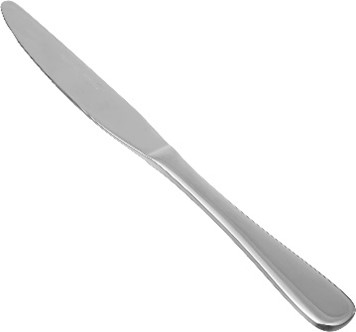
So weekly, after each mowing, I get down on my hands and knees and use a teasing technique to remove any oxalis before it has a chance to go to seed. The tool I use is a dinner plate knife because is it rigid, narrow, and had a dull rounded end. I grab the oxalis by the neck (not really the neck) and pull gently. At the same time, I tease (scratch) the soil where I figure the root is located. Generally. the root gives way and another plant bites the dust (so to speak).
I figure that I have a right to tell you about this experience because it does involve a tool, albeit a tool with very limited use. By the way, this is also the tool I use to spread peanut butter in the rat traps that I try to keep baited year-round.
I guess the one question remains—will I be able to completely tease the oxalis to death—or will it outlast me and tease me to death?
Stan, The Tool Man
P.S. My editor says the last line is a little grim.
Table knife as garden tool
by Stan Logan | Oct 11, 2020 | Safe Gardening
Have you recently been frustrated by having more garden refuse than your bin can hold? This has been my case in recent weeks as fall approaches and I have increasing amount of debris to get rid of. I have found that by climbing into my bin, and jumping up and down, I can compress the plant material into a much smaller volume. Now although this activity is a lot of fun, there are several dangers of which you must be aware. The plant material itself can be a threat if there are sharp pokey things that might penetrate your legs. Then too, the act of climbing into or out of a bin creates the possibility of a tumble. Then too, if you compress the plant material too low, you may not be able to escape. But I guess that’s OK since it’s an organic bin, and you are definitely organic. Sounds like a gruesome episode you might watch on TV about a missing person. Yuck.
I hope that you don’t have to face the weekly volume problem of garden refuse like I do. The City of Davis doesn’t do street pickups for 6 straight months! In any case, perhaps you should leave dumpster stomping to a local neighborhood child. They would probably love it.
Stan, The Tool Man
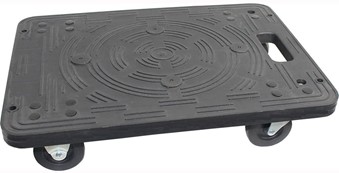
Polypropylene Dolly
by Stan Logan | Oct 10, 2020 | Safe Gardening
Have you recently been frustrated by having more garden refuse than your bin can hold? This has been my case in recent weeks as fall approaches and I have increasing amount of debris to get rid of. I have found that by climbing into my bin, and jumping up and down, I can compress the plant material into a much smaller volume. Now although this activity is a lot of fun, there are several dangers of which you must be aware. The plant material itself can be a threat if there are sharp pokey things that might penetrate your legs. Then too, the act of climbing into or out of a bin creates the possibility of a tumble. Then too, if you compress the plant material too low, you may not be able to escape. But I guess that’s OK since it’s an organic bin, and you are definitely organic. Sounds like a gruesome episode you might watch on TV about a missing person. Yuck.
I hope that you don’t have to face the weekly volume problem of garden refuse like I do. The City of Davis doesn’t do street pickups for 6 straight months! In any case, perhaps you should leave dumpster stomping to a local neighborhood child. They would probably love it.
Stan, The Tool Man
by Stan Logan | Oct 5, 2020 | Garden tools
How is organic dumpster diving different from ordinary dumpster diving? Well, ordinary dumpster diving has been around for decades—ever since dumpsters have been created to store discarded items. Organic dumpster diving is a more recent activity allowed by the recent effort to keep organic materials out of the landfill. Now, searching through the contents of your organic bin may seem somewhat unpleasant, if not downright disgusting. However, sometime a dive seems imperative. Have you ever been working with a favorite tool, and after depositing plant clipping or weeds into your organic bin, that beloved tool has disappeared? After endless searches has revealed no misplaced tool, the fear slowly arises that you have thrown away your tool. This happened to me several days ago when my hand rake suddenly disappeared. So, I pulled the garden refuse out of my bin. No tool. Then I went over to my neighbor’s bin, to which I had added my excess, and pulled all the plant material out and into a garbage can. No tool. Now I must admit that most organic dumpster dives are unsuccessful. I figure the success rate is about 20%. And sure enough, I later found the hand rake lying on the back of the Prius in the driveway. I continues to amaze me how I will have absolutely no recollection of where I put something down.
So, I guess I’d have to say that organic dumpster diving is not something I think you’ll enjoy, but it is the only way that you can be assured that your treasured tool is not gone forever.
Happy diving (?)
Stan, The Tool Man
