by Stan Logan | Jul 2, 2018 | Garden tools, Weeds
You know well the saying, “Do as I say–not as I do”. Well, guess who was burning weeds with his torch when there was no breeze. I was getting rid of the last moss plants in the garden. Smoke billowed up and surrounded my face burning my eyes. I moved side to side to no avail. I don’t think another saying applies—“Smoke follows beauty.” applies here. (Does that bring back memories of sitting around the camp fire?) So I smelled like burned weeds the rest of the day—big deal. But the next day my wife was alarmed at my sight. (Not an uncommon occurrence.) Sure enough, my right eye was bloodshot. Actually bloodshot is hardly sufficient to describe the sight of this valuable little orb. So I e-mailed my Doc. and the response was to apply eye drops and notify her if my eyeball falls out (a slight exaggeration). Sure enough after a couple days, it disappeared . . the blood, that is. So once again, if you use a torch to burn weeds, do so when there is a slight breeze so that smoke doesn’t rise directly up and turn you into a smelly, scary creature.
Stan, The Blog Man
by Stan Logan | Jul 2, 2018 | Garden tools
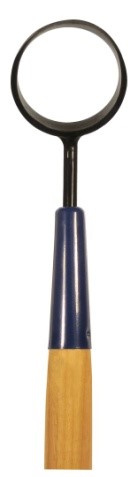
Alas, I have run out of the garden tools I wish to write about—except for this one. It is one of my favorites and I would have told you about it sooner had it been available. The company in Grants Pass, Oregon, for various reasons has not had the long-handled version of this tool in production for several years. A recent call to them revealed a possible resumption of production.
The circle hoe is, as the name implies, a hoe with a circular blade at the end. When the hoe is held in the standard position, the circle attains a vertical position. When you pull the hoe towards you, the sharpened edge of the lower surface slices through the soil to cut off the roots of weeds below the coil level.
So why is this tool special? The circular cutting blade is 1/8-inch-thick so if you have the strength, this tool will transfer that strength to cut through well-developed tap roots. The cutting surface is small, so there is little soil resistance as you pull through even clay soils. The sides and back of the blade are dull so you can maneuver closely around plants without damaging them. The circle hoe is better than a hula hoe in that it is not only stronger, but less soil is disturbed. If you are weeding in bark cover or a mat of pine needles, less material is messed.
Happy weeding,
Stan, The Tool Man
by Stan Logan | Jul 2, 2018 | Garden tools
One person’s flower is another person’s weed. I thought the moss plants growing in the iris garden were attractive. Today I find that LaVille feels differently. I wish she had told me sooner, as there are now large patches of moss growing among the irises and in the paths. So I started torching the moss plants today. I finally quit when my eyes were burning from the smoke that arose from the conflagrations straight up into my face. My advice to you is that if you purchase a torch, doing your burning when there is a slight breeze. Then you won’t stink of burned debris as I currently do.
Last evening and this morning I spent a lot of time pruning back recent grow on bushes and vines. It is amazing how much growth has taken place in the last few weeks. As I used my favorite thinning pruner that I have shown you several times, I cannot stop hoping that you have purchased this tool. The long slender blades easily reach into a plant to reach the desired stem. New growth is thin, so little mechanical advantage is needed, therefore the blades move more rapidly than those of other pruners. Need I remind you how easily they fit in your back pocket? If you lost my list of tools for the gardener, this pruner can be found on Amazon—Corona FS-4350 thinning shear.
Stan, The Blog Man
by Stan Logan | Jun 11, 2018 | Garden tools
I have been sleeping well at night. Now that SPPC has given me the opportunity to express thoughts, my mind isn’t going crazy with ideas and keeping me awake. Now it’s my wife’s turn. She lost a lot of sleep last night thinking about clay projects. So she left me today to work at Alpha Fine Arts in Sacramento. (She is coming back though.) So much creative talent, and so little time.
While playing in the garden today, several thoughts came to mind. At least some of you have continued to resist removing your lawn to conserve water. I am one of these. I love my lawn. At one time it covered the entire back yard. Now it’s far less than 1000 square feet. It contains no weeds, but there are a few brown spots where my son’s dog has done his thing. I love it best when the grandkids are here. See, they have no lawn. Their house is on a steep slope in the hills above Los Gatos. The creek that runs 100 yards below them represents the line of the San Andreas Fault. So you see, it is a treat for them to have a lawn to play on. The girls do cartwheels and wrestle about. At lunch time they spread out a blanket and they lie on their backs in the shade of the hackberry tree while they eat their Nana special sandwiches (strawberry jam, creamed cheese, and peanut butter}. This is really why I love my lawn.
So if you still have a lawn, I hope you have a mower that has a good vacuuming blade. Practically all mowers come with a mulching blade that does not do a great job at sucking up plant debris. You generally can order a blade that does a good job at vacuuming. There unfortunately is no such blade for my Craftsman mower. What do you do with your clippings? I hope you use them for mulch around your plants in the vegetable garden. If your clippings go into the organic recycle bin, I would suggest that you put a layer of dry plant material in first so that the grass clippings don’t form a gooey mess that sticks to the bottom of the bin. Another suggestion is to leave the bin lid open. This lets the contents dry out and this eliminates a lot of odor and prevents the condensation on the bin inner surfaces that gathers debris when the bins are dumped. Now . . . if you just had a power washer, you could keep all your bins clean enough to eat out of . . . Perhaps that’s a stretch.
Stan, The Blog Man
by Stan Logan | May 29, 2018 | Container plants, Garden tools
SPPC 5 23 18
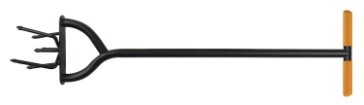
If you have a twist tiller and no longer are using it, I will buy it from you. A member of the Iris Club wants one. She also wants 2 round nose and one flat end shovels, a pick axe, hula hoe, rake, and wheel barrow.
If you have harvested too many bananas at one time, (You do have a banana tree in your garden, don’t you?) as soon as a banana starts to get those brown spots, put them in the frig. They may turn really ugly, but the fruit will stay palatable for days.
A tool you may wish to consider is a rubber mallet. Removing a plant from a pot is generally easy with plastic pots. You are able to squeeze the sides to loosen the soil. But with a clay or ceramic pot removal can be a chore. This is a two man job, but if one person supports the plant and soil on its side or up-side down, the other person can rap on the top of the lip of the pot to knock it loose. Using a block of wood with a regular hammer will also work and keep you from breaking the pot.
Stan, The Blog Man
by Stan Logan | May 11, 2018 | Garden tools
Yesterday, LaVille was digging up bulbs using what is called a transplanting spade. When I showed this shovel to you, I said it was perfect for digging holes for transplanting from gallon pots. I probably should have described it instead as a short, light-weight shovel that is the right tool for a woman to use. Now I realize that sounds sexist. Does it help if I tell you that I have used this spade a lot. In fact is probably the reason that I got a herniated disc in my neck because I used it in a jabbing motion to dig an irrigation line through tough soil. Anyway . . . let’s simply say that it is an easy digging tool because the blade is narrow and therefore finds less resistance when penetrating the soil. Then too, the blade is long so it penetrates to a depth where bulbs are abiding. The grip at the end of the 4 foot handle allows you increased torque leverage (The shovel doesn’t twist in your hands easily). If I piqued your interest, google “transplanting spade.”
While LaVille was digging, I was working with the circle hoe. The neighbor has many huge privet trees. The birdies love the fruit and kindly deposit the seeds when they perch in our pine and hackberry. Privet seedlings sprout up through the pine needles covering the ground. The circle hoe allows me to sever the weeds without disturbing the pine needle ground cover too much. Every now and then I come across an oak seedling that a scrub jay has planted. The circle hoe is strong enough to penetrate the soil to uproot the acorn. You know, if you have some interest in this hoe, I would let you practice using it around my yard . . . for free! The circle hoe is available from gardensnob.com.
My impaler didn’t work well today. (The impaler is a stick with a nail at the end.) You see, our neighbor (the same one with the multiple privet trees) has a huge magnolia tree in his front yard. His house is on our west side. Needless to say, a good number of magnolia leaves end up on our front landscaping. For the last two weeks I haven’t been able to clean up the front yard. When I finally was able to get to the task today, the “poker” as I call it did not pick up the leaves very well. The leaves were so dried up that the leaves did not cling to the galvanized nail. The nail’s penetration created too large of a hole, or the leaf shattered. So if you are going to use an impaler to gather up large leaves in your landscaping, get to it before the leaves have a chance to become brittle.
Stan, the Blog Man
